

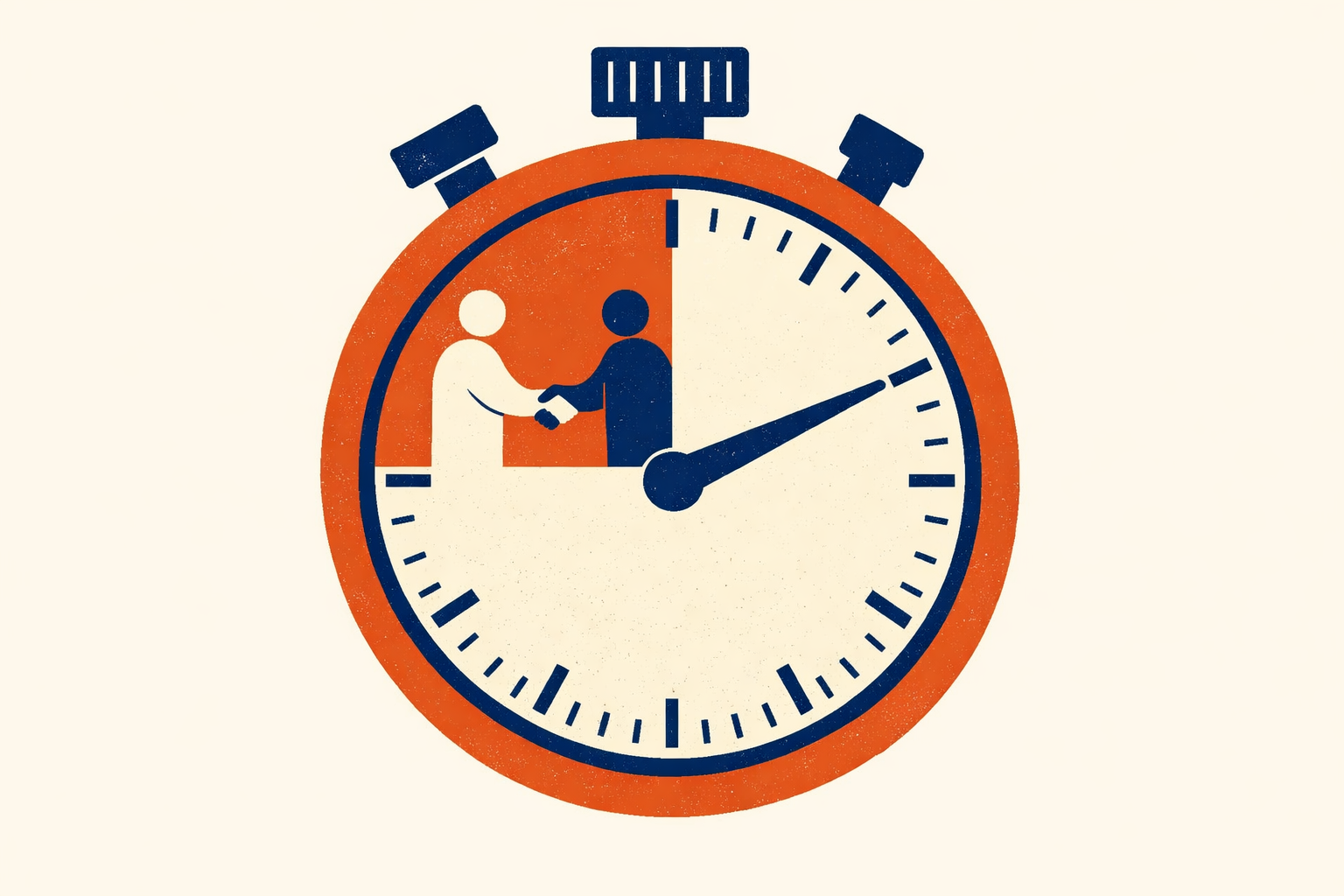
The first five minutes of an interview often look routine: a greeting, a seat, a quick exchange about the day, and a prompt like “Tell me about yourself.” Yet this is where many recruiters begin forming a working hypothesis about how the conversation will go. Not because they are impatient, but because early signals help them choose which areas to probe, how much structure to provide, and how skeptical to be about later claims. In a first impression interview, those early signals are rarely about charm. They are about whether the candidate is likely to think clearly under mild pressure.
Why this interview situation is more complex than it appears
The opening is deceptively hard because it combines multiple tasks at once. You are building rapport, interpreting cues, calibrating your level of detail, and choosing a narrative arc before you have enough information about the interviewer’s priorities. A candidate can be technically strong and still struggle here, simply because the cognitive load is high and the time is short.
Common preparation often fails because it treats the start as a script. People rehearse a polished introduction and assume the rest will unfold naturally. In practice, interview opening moments rarely match the conditions of rehearsal. The interviewer may interrupt, ask for a shorter version, or move immediately into specifics. When a candidate is attached to a memorized track, even small deviations can produce visible friction: rushed speech, missed questions, or an overly defensive tone. The interview first minutes are less about “nailing” a line and more about adapting without losing structure.
Takeaway: Treat the opening as a live diagnostic, not a recital. Prepare to adjust length, emphasis, and pace without losing your core message.
What recruiters are actually evaluating
Recruiters and hiring managers are not making a final decision in five minutes, but they are making several operational decisions. They are deciding how to spend limited time, what to verify, and what risk level the candidate represents. The initial impression is used to guide the rest of the interview, including how deeply to test claims and how much benefit of the doubt to extend.
Decision-making under constraint. Early questions are often broad by design. “Walk me through your background” tests whether you can choose what matters when everything could be mentioned. Candidates who can prioritize tend to do well later, because most roles require judgment about what to tackle first and what to leave aside.
Clarity and signal-to-noise ratio. Recruiters listen for whether the candidate can communicate in a way that makes evaluation possible. This is not about being eloquent. It is about making it easy to understand your role, the scope of your work, and the outcome. If the first few answers are dense with context but light on decisions and results, the interviewer often has to work too hard to extract meaning.
Judgment and self-awareness. In the first impression interview, subtle cues matter: how you describe past teams, how you attribute success, and how you talk about trade-offs. Candidates who blame previous employers, speak in absolutes, or present every project as a triumph can raise concerns about maturity. Conversely, candidates who can name constraints and explain choices tend to sound credible, even when outcomes were mixed.
Structure under light pressure. The opening is mild pressure, but it is pressure. Recruiters watch whether you can keep a thread while thinking. A structured answer does not need a formal framework, but it does need a beginning, middle, and end. When answers wander, interviewers often assume the candidate will also wander in meetings, status updates, and written communication.
Takeaway: Early evaluation is less about likability and more about whether you help the interviewer do their job: understand your impact, assess risk, and decide what to probe next.
Common mistakes candidates make
Most early mistakes are not dramatic. They are small misreads that accumulate, especially in the interview first minutes when the interviewer has little context and is forming a baseline.
Over-answering the first prompt. Many candidates treat “Tell me about yourself” as permission to deliver their full career history. The result is often a five-minute monologue with no clear point. Interviewers may interrupt, not out of rudeness, but because they need to establish a faster rhythm. Candidates who interpret interruption as rejection can become flustered and less coherent.
Under-specifying their role. Candidates sometimes describe projects in a way that hides their actual contribution: “We launched,” “We improved,” “We delivered.” In the opening, interviewers are trying to locate you in the story. If they cannot tell whether you led, supported, or observed, they will assume the safest interpretation, which is usually smaller scope.
Leading with tools instead of decisions. A common pattern is to open with a list of platforms, methodologies, or certifications. Tools matter, but early questions are typically about how you think and what you have done with those tools. When the first impression interview starts with a technology inventory, recruiters often conclude the candidate is either junior or hiding behind terminology.
Misjudging tone. Some candidates try to sound casual to reduce tension and end up sounding dismissive or overly familiar. Others try to sound formal and come across as stiff. The problem is not the style itself; it is mismatch. If the interviewer’s tone is direct and time-conscious, a long warm-up can feel like avoidance. If the interviewer is relational, a terse answer can feel guarded.
Correcting the interviewer too early. When an interviewer mispronounces a name, gets a title slightly wrong, or makes a small assumption, candidates sometimes jump in to correct immediately. Accuracy matters, but so does judgment. Early correction can be read as defensiveness or lack of social calibration, particularly if the correction is delivered sharply.
Takeaway: In the interview opening, avoid extremes. Keep answers tight, make your role explicit, and match the interviewer’s pace without losing professionalism.
Why experience alone does not guarantee success
Senior candidates often expect the opening to be easy. They have more stories, more confidence, and more practice speaking about work. Yet seniority introduces its own risks. A long track record can make it harder to choose what to highlight, and confidence can reduce the discipline to prepare.
One common issue is “resume gravity.” Experienced candidates feel obligated to cover everything, especially if their path is non-linear. The result is a narrative that is accurate but not helpful. Recruiters are not looking for completeness; they are looking for relevance. A senior candidate who cannot quickly establish the through-line of their career can appear unfocused, even if they have strong accomplishments.
Another issue is relying on reputation signals rather than explanation. Candidates who have worked at well-known firms sometimes assume the brand will carry the story. But interviewers still need evidence of decisions made, constraints handled, and outcomes achieved. In a first impression interview, a brand name can raise expectations, which makes vague answers more damaging.
Finally, experience can create habits that do not travel well across contexts. A leader who is used to speaking to internal stakeholders may assume shared context and skip definitions. Or they may default to strategic language and avoid operational detail. In interviews, that can look like evasion. Seniority is not a substitute for clarity; it increases the need for it.
Takeaway: The more experience you have, the more selective you must be. Your opening should clarify your through-line and decision patterns, not your full chronology.
What effective preparation really involves
Effective preparation for the first five minutes is less about polishing and more about stress-testing. You are preparing for variability: different interviewer styles, different time constraints, and different follow-up questions. The goal is to build a response that is stable under interruption and flexible under redirection.
Repetition with variation. Repeating the same introduction can help, but only if you practice multiple versions: a 30-second summary, a 90-second narrative, and a two-minute version that includes one concrete example. This matters because interviewers often ask for “the short version” or jump straight into specifics. If you only have one length, you will either overshoot or undershoot.
Realism about what gets tested. The opening is not just “tell me about yourself.” It includes logistics, small talk, and the first clarifying question. Practice the transitions: how you move from greeting to content, how you handle a delayed start, or how you respond when the interviewer asks something unexpected like salary expectations or relocation right away. These moments shape the initial impression because they reveal how you manage mild discomfort.
Feedback that focuses on decisions and structure. Many candidates seek feedback on confidence or presence. Useful feedback is more specific: Did your answer make your role unambiguous. Did you state the problem, your decision, and the outcome. Did you use too much setup. Did you answer the question asked. This is the kind of feedback that changes performance quickly.
Practice listening, not just speaking. Candidates often prepare content but not attention. In the interview first minutes, listening errors are common: answering a question you expected rather than the one asked, missing a constraint, or ignoring a cue that the interviewer wants brevity. Practicing with someone who can interrupt or redirect you is more valuable than practicing alone.
Takeaway: Preparation works when it is designed to survive real conditions: interruptions, time pressure, and ambiguous prompts.
How simulation fits into this preparation logic
Simulation can add the missing ingredient: realistic variability with consistent feedback. Platforms such as Nova RH can be used to run repeated interview openings under different prompts and pacing, helping candidates refine a first impression interview response that stays clear when the conversation shifts. Used well, simulation is not about perfecting a script; it is about reducing unforced errors in the first five minutes.
Takeaway: If your early answers change noticeably depending on the interviewer, simulation can help you stabilize structure while keeping flexibility.
Conclusion
The first five minutes rarely decide an outcome on their own, but they shape the interview’s trajectory. Interviewers use early signals to choose what to test, how much context to provide, and how to interpret what follows. Candidates who do well are usually not performing; they are making evaluation easy through clear structure, calibrated detail, and steady judgment. If you want to improve your initial impression, focus on practicing adaptable openings with realistic interruption and targeted feedback, and consider a simulation session as a neutral way to pressure-test your approach.